

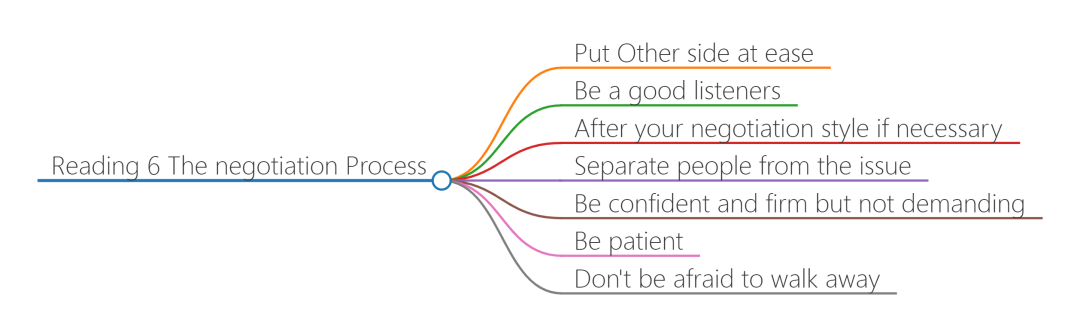
Put Other side at ease
Once the negotiation process has started, the first thing you should do after you introduce yourself to the other party is make the other side feel at ease. If the meeting takes place in your office, make sure they are comfortable with the temperature of the room, and offer them coffee or water and something to eat. Give them a tour of the facilities so they know where the restrooms, phones, and computer access(if available) are in case they need to use them. Once everyone is comfortable, initiate small talk based on the research you did earlier. Talk about any interests you may have in common, ask about their children, or discuss hobbies or any other interests they may have.
一旦谈判过程开始,在向对方自我介绍之后,你首先应该做的事情是让对方感到轻松。如果会议在你的办公室举行,确保他们对房间的温度感到舒适,并为他们提供咖啡或水以及一些事物。带他们参观设施,这样他们就知道洗手间、电话和电脑使用(如果有的话)的位置,以备不时之需。当每个人都感到舒适后,开始根据你之前的调研进行寒暄。谈论你们可能共有的兴趣,询问他们的孩子,或者讨论爱好或他们感兴趣的其他事项。
Be a good listeners
Active listening skills are crucial if you want to be a skilled negotiator. Being a good listener is challenging because you may feel stressed during the negotiation. Additionally, listening requires concentration and patience. Although you may want to interrupt with your comments, try to be patient and concentrate on what is being said. Many people find it difficult to concentrate because they are too busy preparing what they will say next in reaction to what was said.
积极倾听技巧对于想成为熟练谈判者的人来说至关重要。做一个好的听众是具有挑战性,因为在谈判过程中你可能会感到压力。此外,倾听还需要专注和耐心。尽管你可能想打断对方发表自己的意见,但尽量保持耐心,专注于所说的内容。许多人发现很难集中注意力,因为他们忙于准备对所听内容的回应。
If you do your research, plan, and rehearse everything you intend to say prior to the negotiation, you will be able to listen and concentrate much more effectively during the negotiation. If you prove to the other side that you are paying attention to what they are saying, they will be more likely to listen to what you say. To avoid having the other party feeling like everything they are saying is "going in one ear and out the other." , try to appear genuinely interested and use physical gestures to prove that you are paying attention such as tilting your head and nodding. Saying "Go on" or "I see" are other effective ways to show the other side that you are interested in what they have just said. Even if you do not agree with their point of view, make sure you acknowledge that you understand where he is coming from and how he feels. Acknowledging the other person's emotions helps him feel more comfortable so that you can both move on to the problem-solving phases.
如果你在谈判前做好研究、计划并预演你打算说的每一句话,你将能够在谈判过程中更有效地倾听和集中注意力。如果你向对方证明你在认真听他们说的话,他们更有可能倾听你说的话。为了避免让对方感觉他们说的每句话都“左耳朵进右耳朵出”,试着表现出真正的兴趣,并用身体动作来证明你在聆听,例如歪头和点头。说“继续”或“我明白”也是向对方表明你对刚刚达成共识的观点感兴趣的有效方式。在同意对方观点时,要确保你承认你理解对方的出发点和感受。承认对方的情绪有助于让对方感觉更加舒适,这样你们都可以进入问题解决阶段。
When listening, if something that was said remains unclear or ambiguous to you, be sure to ask for clarification. And, once you think you have understood something, repeat it back in a brief way to make sure there are no misunderstandings.
如果听到的话对你来说仍然不清楚或含糊不清,一定要请求澄清。而且,一旦你认为自己已经理解某件事,简明地重复一遍,以确保没有误解。
After your negotiation style if necessary
You may find that you need to adjust your negotiation style to match the other team's personality. For example, if your style is more indirect but the other side gets right down to business once the meeting begins, perhaps you should be more direct. If the other team seems to be more analytical, focus on your presentation and be sure to include lots of numbers, charts, and graphs to support and explain your point of view.
你可能发现你需要去调整你的谈判风格以适应对方团队的性格。例如,如果你的风格更为间接,但对方一开始就直奔主图,也许你应该更直接一点。如果对方团队看起来更注重分析,那么在你的展示中要侧重数据,确保大量数字、图表,并验证和解释你的观点。
Separate people from the issue
People become too emotionally involved with the issues of the negotiation and their own position. When the other side attacks their position or criticizes the issues under discussion, they feel as if they are being attacked personally. It is important that you separate the people on the other side from the issues that you are trying to resolve. Instead of attacking the other party by saying “Your company ripped me off!” explain how the situation made you feel: "I felt let down."
人们在谈判中会对问题和自己一方的立场过于情绪化。当对方攻击他们的立场或问题时,他们会觉得自己的人格受到了攻击。重要的是要将对方的人与您试图解决的问题分开。与其通过说“贵公司骗了我!”来攻击对方,不如解释这种情况让你的感受:“我感到很失望。”
Actively listening to the other side when they are speaking, acknowledging their emotions, and making a sincere effort to understand their points of view helps ensure that you have separated the people from the issues at hand. When people become emotional during a negotiation, it is important that you recognize their emotions even if they seem outrageous. Simple phrases such as " I understand your frustration" would suffice. Failure to notice their emotions may lead them to feel alienated or to an even stronger reaction.
在对方发言时积极倾听,承认他们的情绪,并真诚地努力理解他们的观点,这是确保你已将人与问题分开的方法。当人们在谈判中情绪激动时,即使他们的情绪看起来很过分,也要注意区分并认可这些情绪。简单的表达,如“我理解你的挫折感”,就足够了。如果忽视他们的情绪,可能会让他们感到被疏远,甚至产生更强烈的反应。
Be confident and firm but not demanding
One way to exude confidence during a negotiation is to practice, practice, practice. For example, you can work on your listening skills next time you get your car fixed at the car shop or negotiate with your spouse about where you want to go on your next vacation. You negotiate every day with your family, friends, and strangers, so you should find ample opportunities to practice.
Another way to show your audience that you are in control is by exhibiting positive body language. Lee suggests that you look your audience members in the eye, stand or sit straight, smile, moderate and project your tone and pitch, and speak slowly. Avoid phrases such as "I should have done more research in this area but..." or " I'm not as experienced as the rest of you but...that may give the impression that you are unsure of what you are saying.
在谈判中展现自信的一种方式是不断练习。例如,下次去修车或与朋友讨论下一次度假去哪里时,你可以练习你的倾听技巧。你每天都在与家人、朋友和陌生人进行谈判,因此你应该找到充足的机会来练习。
另一种向听众展示你掌控全局的方法是展示积极的肢体语言。建议与听众眼神交流,站立或坐直,微笑,控制并调节语调和音高,并缓慢表达。避免说诸如“我本该在这个领域做更多研究,但是...”之类的话,这可能会给人一种你对自己所说内容不确定的印象。
Be patient
It is important to remain calm and patient at all times, particularly when the other side is screaming, personally attacking you or your company, or behaving in an emotional manner. Although it may be difficult to maintain your composure under tense circumstances, try to calm the other person down by acknowledging his emotional state and trying to understand his point of view, followed by a brief 15-minute break. The person probably needs recognition, reassurance, security, or esteem, or perhaps he is just having a bad day. Maybe his spouse lost her job today. The idea is to "kill them with kindness" and avoid bringing up it in the future to save them any embarrassment.
在任何时候保持冷静和耐心都很重要,尤其是在对方尖叫、对你或你的公司进行人身攻击或情绪化行为时,虽然在紧张的情况下保持冷静可能很困难,但试着通过承认对方的情绪状态并尝试理解他的观点来安抚对方,然后进行短暂的15分钟休息。对方可能需要认可、安慰、安全感或尊重,或者他可能只是今天今天心情不好。也许他的配偶今天失业了。关键是以“善意对待”来应对,并避免在未来提起此事,以免造成尴尬。
When you ask questions to find out what the other party is thinking, be sure to ask open-ended questions, questions that must be answered with more than just a simple yes or no. You will get more information from the other side by asking "what did you like and dislike about your last job?" instead of "Did you like your last job?" Or, "How would you describe your management style?" in place of "Do you lead by consensus?" Open-ended questions tend to begin with "who...," "what...." "when...," "why...," "where...," "how...,","describe a time when...," "please explain...," "please tell me...," and so on.
When the person has finished answering your question, refrain from immediately asking another question or making a statement. A few seconds of awkward silence is usually enough to make people uncomfortable, which influences them to continue speaking and you may be able to extract some more information from them.
当你提出问题想要了解对方在想什么时,一定要提开放式问题,也必须用不止简单的“是”或“否”来回答问题。通过问“你上一份工作中喜欢和不喜欢的是什么?”而不是“你喜欢上份工作吗?”或者“你会如何描述你的管理风格?”而不是“你是通过共识来领导吗?”,你可以从从对方那里获得更多信息。开放式问题通常以“谁....”、"什么...."、"什么时候..."、“为什么...”、"哪里..."、"如何..."、"描述一次....的经历"、“请解释...”、请告诉我...,等等开头。
当对方回答完你的问题后,不要立即提出另一个问题或发表意见。几秒钟的尴尬沉默通常足以让人感到不舒服,这会促使他们继续说下去,你也可能从中获取更多信息。
Don't be afraid to walk away
Sometimes even though you do your homework. understand the other side's point of view and interests, and come up with a list of creative solutions keeping the interests of both parties in mind, you find yourself unable to reach a satisfactory agreement with the other party. Although it is sometimes tempting to just sign a deal and get it done as quickly as possible so that you can move on to other pressing tasks, be patient. If the offer you are thinking about signing is worse than your BATNA, do not be afraid to walk away. Sometimes after you declare to the other party that you are walking away, the other side will reconsider the agreement---but not always. Remember, if you are not valuable to them, why would they care about you? You should be able to find another party to strike a more reasonable deal with, one that is better than your BATNA.
有时,即使你做了充分的准备,了解了对方的观点和利益,并提出了兼顾双方利益的创造性解决方案,你仍然可能无法与对方达成令人满意的协议。尽管有时可能会有签约并尽快完成,以便投入其他紧迫任务的诱惑,但要保持耐心。如果你考虑签署的报价比你的BATNA(最佳替代方案)还要差,不要害怕退出。有时,对方会重新考虑协议---但并非总是如此。请记住,如果你对他们没有价值,他们会在乎你吗?你应该能够找到另一方达成一个更加合理的交易,这个交易要比你的BATNA更好。