

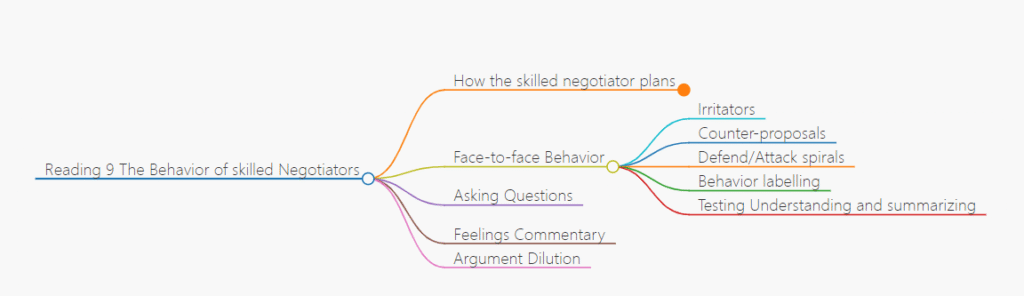
Face-to-face Behavior
面对面的行为

Skilled negotiators show marked differences in their face-to-face behavior, compared with average negotiators. They use certain types of behavior significantly more frequently while they tend to avoid other types.
与普通谈判者相比,熟练的谈判者在面对面行为上表现出明显差异。他们更显著更频繁地使用某些类型的行为,同时倾向于避免其他类型的行为。
Irritators
刺激物
Certain words and phrases which are commonly used during negotiation have negligible value in persuading the other party, but do cause irritation. Probably the most frequent example of the these is the term "generous offer" used by negotiators to describe their own proposals. Similarly, word such as "fair" and "reasonable", and other terms with a high positive value loading, have no persuasive power when used as self-praise, while serving to irritate the other party because of the implication that they are unfair, unreasonable, and so on. Most negotiators avoid the gratuitous use of direct insults of unfavorable value judgments. They know that there is little to gain from saying unfavorable things about the other party during face-to-face exchanges.
在谈判中常用的一些词语和短语在说服对方方面几乎没有价值,但却会引起对方的反感。其中最常见的例子可能是谈判者用来描述自己提议的“慷慨报价”这一术语。同样,像“公平”“合理”这类高正面价值的词语,当用作自我夸赞时,并没有说服力,反而会因为暗示对方不公平、不合理而让对方感到恼火。大多数谈判者会避免无缘无故使用直接的侮辱或不利评价。他们知道,在面对面的交流中,说对方不利的话几乎没有好处。
However, the other side of the coin---saying gratuitously favorable things about themselves--seems harder for them to avoid. Although the average negotiator uses irritating words fairly regularly, the skilled negotiator tends to avoid them.
然而,事情的另一面——无缘无故地说一些对自己有利的话——似乎更难以避免。尽管普通谈判者时常使用令人烦恼的词语,但熟练的谈判者通常会避免使用这些词语。
It is hardly surprising that skilled negotiators use fewer irritators. Any type of verbal behavior which antagonizes without a persuasive effect is unlikely to be productive. More surprising is the heavy use of irritators by average negotiators. The conclusion is that most people fail to recognize the counterproductive effect of using positive value judgments about themselves and, in doing so, implying negative judgments of the other party.
熟练的谈判者使用较少的刺激性言语几乎不足为奇。任何一种没有说服效果、只会引起对方反感的言语行为都不太可能产生积极效果。更令人惊讶的是,普通谈判者却频繁使用刺激性言语。结论是,大多数人未能认识到使用关于自身的正面评价可能带来的反效果,同时在这样做的过程中暗示了对对方的负面评价。
Counter-proposals
During negotiation, it frequently happens that one party puts forward a proposal and the other party immediately responds with a counter-proposal. Skilled negotiators makes immediate counter-proposals much less frequently than average negotiators.
• Counter-proposals introduce an additional option, sometimes a whole new issue, which complicates and clouds the clarity of the negotiation. • Counter-proposals are put forward at a point where the other party has least receptiveness, being concerned with their own proposal. • Counter-proposals are perceived as blocking or disagreeing by other party , not as proposals.
These reasons probably explain why the skilled negotiator is less likely to use counter-proposing as a tactic than is the average negotiator.
在谈判过程中,经常会出现这样一种情况:一方提出一个提议,另一方立刻以反提议作回应。熟练的谈判者提出反提议的频率远低于普通谈判者。
• 反提议引入了一个额外的选择,有时甚至是一整个新议题,这会使谈判变得复杂并模糊其清晰性。 • 反提议通常在对方最不易接受的时刻提出,因为他们正专注于自己的提议。 • 对方往往会将反提议视为阻碍或反对,而非真正的提议。 这些原因可能解释了为什么熟练的谈判者比普通谈判者更少将反提议作为一种策略使用。
Defend/Attack spirals
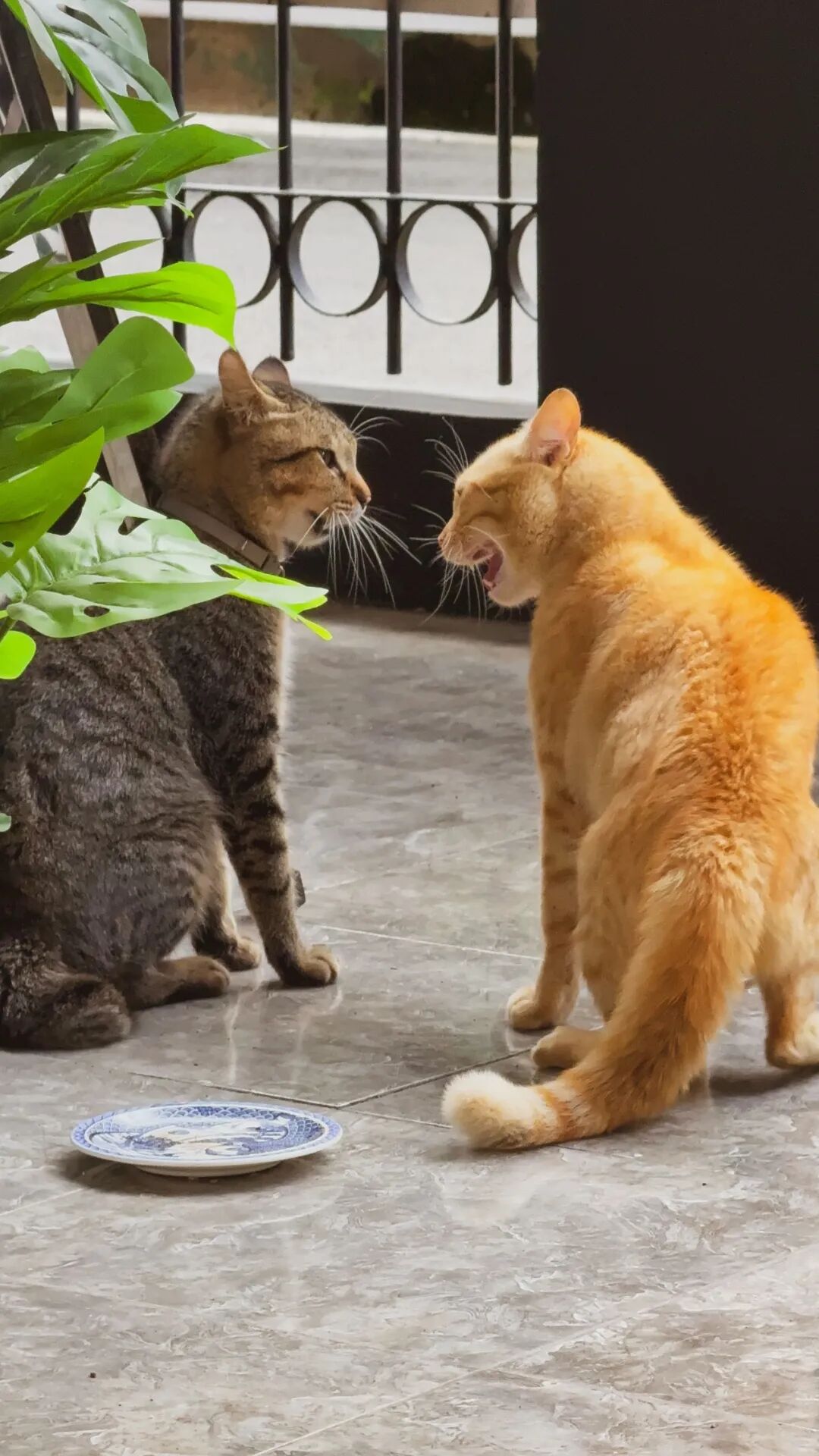
Because negotiation frequently involves conflict, negotiators may become heated and use emotional or value-loaded behaviors. When such behavior is used to attack the other party, or to make an emotional defense, it is termed as "defending/attacking." Once initiated, this behavior tends to form a spiral of increasing intensity: one negotiator would attack, and the other would defend, usually in a manner which the first negotiator perceived as an attack. In consequence the first negotiator attacks more vigorously and the spiral commenced. Defending and attacking are often difficult to distinguish from each other. What one negotiator perceives as a legitimate defense, the other party might see as an unwarranted attack. This is the root cause of most defending/attacking spirals. Average negotiators in particular are likely to react defensively, using comments such as, "You can't blame us for that," or, "It's not our fault that the present difficulty has arisen." Such comments frequently provoke a sharp defensive reaction from the other side of the table.
由于谈判经常涉及冲突,谈判者可能会情绪激动,并使用带有情感或价值倾向的行为。当这种行为被用来攻击对方或进行情绪防御时,称为“防御/攻击”。一旦开始,这种行为往往会形成强度不断增加的螺旋:一方谈判者进行攻击,而另一方进行防御,通常以第一方谈判者认为是攻击的方式回应。因此,第一方谈判者会更加猛烈地攻击,从而螺旋进一步加剧。防御与攻击之间往往难以区分。一方谈判者认为是合理防御的行为,另一方可能会将其视为无理攻击。这是大多数防御/攻击螺旋的根本原因。尤其是普通谈判者,往往会采取防御性的反应,使用诸如“你不能因此怪我们”或“目前的困难出现并不是我们的错”等评论。这类评论往往会引发对方强烈的防御反应。
Skilled negotiators, if they do decide to attack, give no warning and attack hard. Average negotiators, in contrast, usually begin their attacking gently, working their way up to more intense attacks slowly, and, in doing so, causing the other party to build up its defensive behavior in the characteristic defending/attacking spiral.
熟练的谈判者,如果他们决定进攻,不会发出任何警告,攻击也会非常猛烈。相比之下,普通谈判者通常会先温和地开始攻击,然后逐渐加大攻击力度,这样就会导致对方在典型的防御/攻击螺旋中逐步增强防御行为。
Behavior labelling
Skilled negotiators tend to give an advance indication of the class of behavior they are about to use. So, for example, instead of just asking, "How many units are there?" they would say, "Can I ask you a question--how many units are there?" thereby giving a warning that a questing is coming.
熟练的谈判者往往会事先暗示他们即将使用的行为类型。例如,他们不会直接问“有多少单位?”,而会说“我可以问你一个问题吗——有多少单位?”从而提前提示对方即将提出问题。
Instead of just making a proposal they would say, "If I could make a suggestion..."and then follow this advance label with their proposal. With one exception, average negotiators are significantly less likely to label their behavior in this way. The only behavior which the average negotiator is more likely to label in advance is disagreeing.
他们不会只是提出建议,而是会说:“如果我可以提个建议的话……”然后再跟随他们的提议。除了一个例外,普通谈判者明显不太可能以这种方式提前标注自己的行为。普通谈判者唯一更可能提前标注的行为是表示不同意。
In general, labelling of behavior gives the negotiator the following advantages:
• It draws the attention of the listeners to the behavior that follows. In this way social pressure can be brought to force a response • It slows the negotiation down, giving time for the negotiators using labelling to gather their thoughts and for the other party to clear their mind from the previous statements. • It introduces a formality which takes away a little of the cut-and-thrust and therefore keeps the negotiation on a rational level. • It reduces ambiguity and leads to clearer communication.
总体而言,对行为进行标签化给谈判者带来以下好处:
• 它将听众的注意力引向随后的行为,从而可以施加社会压力以促使对方做出回应。 • 它减缓谈判进程,使使用标签化的谈判者有时间整理思路,也让对方从之前的陈述中恢复清醒的头脑。 • 它引入了一种正式感,从而减少了谈判中的激烈交锋,使谈判保持在理性的水平。 • 它减少了歧义,促使沟通更加清晰。
Skilled negotiator do, however, avoid labelling their disagreement. While average negotiators will characteristically say, "I disagree with that because of ...," thus labelling that they are about to disagree, skilled negotiators are more likely to begin with the reasons and lead up to the disagreement.
然而,熟练的谈判者会避免给他们的分歧贴标签。普通的谈判者通常会说:“我不同意,因为……”,从而标明他们即将表达不同意见,而熟练的谈判者更可能从原因开始,逐步引入分歧。
If one of the functions of behavior labelling is to make a negotiator's intentions clear, then it is hardly surprising that skilled negotiators avoid making it clear that they intend to disagree. They would normally prefer their reasons to be considered making it clear that they intend to disagree. They would normally prefer their reasons to be considered more neutrally so that acceptance involved minimal loss of face for the other party. But, if labelling disagreement is likely to be counter-productive, why does the average negotiator label disagreeing behavior more than all the other types of behavior put together? Most probably this tendency reflects the order in which we think. We decide that an argument we hear is unacceptable and only then do we assemble reasons to show why. The average negotiator speaks this disagreement first, then finds and gives reasons afterwards.
如果行为标注的一个功能是使谈判者的意图明确,那么熟练的谈判者避免明确表示他们打算反对也就不足为奇了。他们通常更希望自己的理由能被较为中立地考虑,以便对方在接受时面子损失最小。但是,如果标注反对行为可能适得其反,为什么普通谈判者标注反对行为的概率却比所有其他类型行为加起来还要高呢?最可能的原因是,这种倾向反映了我们的思维顺序。我们首先判断听到的论点不可接受,然后才组织理由来说明原因。普通谈判者先表达不同意的立场,然后才找到并给出理由。
Testing Understanding and summarizing
Two behaviors with a similar function--testing understanding and summarizing---are used significantly more by the skilled negotiator. Testing understanding is a behavior which checks to establish whether a previous contribution or statement in the negotiation has been understood. Summarizing is a compact restatement of previous points in the discussion. Both behaviors sort out misunderstandings and reduce misconceptions.
具有类似功能的两种行为——测试理解和总结——在熟练的谈判者使用中明显更多。测试理解是一种行为,用于检查是否理解了谈判中先前的贡献或陈述。总结则是对讨论中之前要点的简明重述。这两种行为都有助于理清误解并减少误判。
The higher level of these behaviors by skilled negotiators reflects their concern with clarity and the prevention of misunderstanding. It may also relate to two less obvious factors.
• Reflecting . Skilled negotiators tend to use testing understanding as form of reflecting behavior---turning the other party's words back in order to obtain further responses, e.g.," So do I understand that you are saying you don't see any merit in this proposal at all?" • Implementation concern. Average negotiators, in their anxiety to obtain an agreement, would often quite deliberately fail to test understanding or to summarize. They would prefer to leave ambiguous points to be cleared later, fearing that making things explicit might cause the party to disagree. In short, their predominant objective is to obtain an agreement and they would not probe too deeply into any area of potential misunderstanding which might prejudice immediate agreement, even if it is likely to give rise to difficulties at the implementation stage. Skilled negotiators, on the other hand, tend to have a greater concern with the successful implementation. They would test and summarize in order to check out any ambiguities at the negotiating stage rather than leave them as potential hazard for implementation.
熟练谈判者在这些行为上的高水平反映了他们对清晰度和防止误解的关注。这也可能与两个不太明显的因素有关。
• 复述:熟练的谈判者倾向于使用检测理解作为一种复述表达手段——将对方的话语复述回去以获取进一步的回应,例如,“所以我的理解是,您是说您完全看不到这个提议的任何价值,对吗?” • 落地执行顾虑 :一般谈判者由于急于达成协议,经常会有意忽略检测理解或进行总结。他们更倾向于将含糊不清的点留待以后再解决,担心把事情挑明可能导致对方不同意。简而言之,他们的主要目标是达成协议,不会过于深入探讨任何可能的误解领域,以免影响即时达成协议,即使这可能在执行阶段带来困难。另一方面,熟练的谈判者往往更关心协议能否顺利落地执行。他们会在谈判阶段进行检验和总结,在谈判阶段就消除模糊点,而不是将这些问题留作执行时的潜在风险。