



#前言
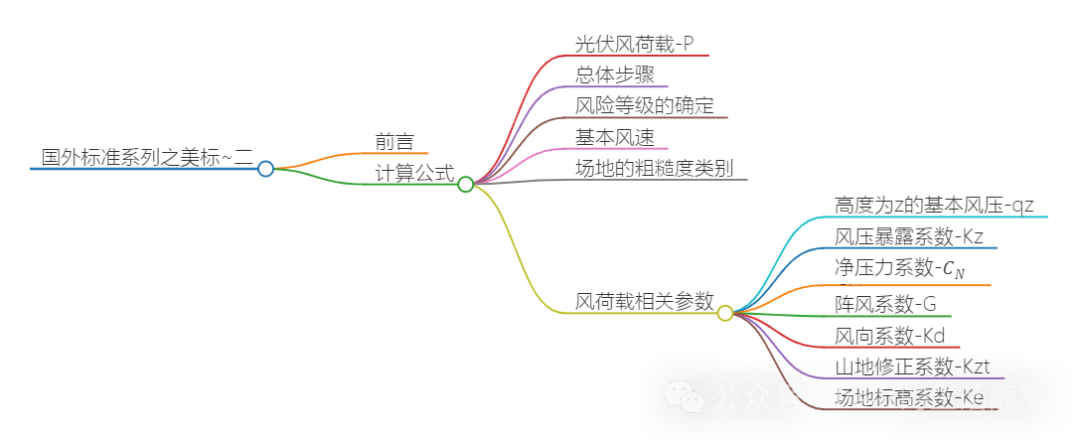
在上一篇分享的文章中,简单列举了部分美标规范,从中美钢结构规范的对比理解、对风速的理解做了介绍,其中对于风速的理解的部分主要是从重现期与时距比较国标与美标的差异,同时针对美标的不同重现期以及相互之间的转化做了整理,还对不同风区图做了一个大致的阐述。同时引出了风压计算公式,接下来的部分主要是对基本风压计算公式中的一些参数进行细致的理解(有理解不到位或错误的地方需要做相应的甄别),以便更好的在实际运用中做相应的计算。
国外标准系列之美标~一
#计算公式
#光伏风荷载-P
光伏支架角度小于45度,可以视为单坡屋面。
For tilt angle≤45°,considered as open building with mono-slope roof).According to criterion 27.3.2: Open Buildings with Mono-slope, Pitched,or Troughed Free Roofs:
体型系数:根据体型系数表来确认(下文有提到)
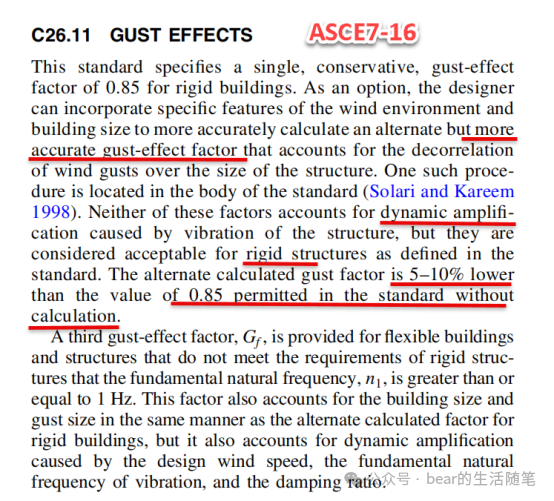
G:gust-effect factor, The gust-effect factor for a rigid building or other structure is permitted to be taken as 0.85.(刚性建筑或其他结构的阵风效应系数取值0.85)
#总体步骤确定结构的风险性类别:Determine Risk Category of building; 确定基本风速:Determine the basic wind speed,V,for the applicable Risk Category; 确定风荷载的一些参数:Determine wind load parameters;
#风险等级的确定
The first step is to determine the Risk Category of the solar panel based on the use or occupancy
From Table 1.5-1 of ASCE 7-16 ,we can classify the ground-mounted solar panel to Risk Category I From Table 1604.5 of IBC2015 ,we can classify the ground-mounted solar panel to Risk Category I
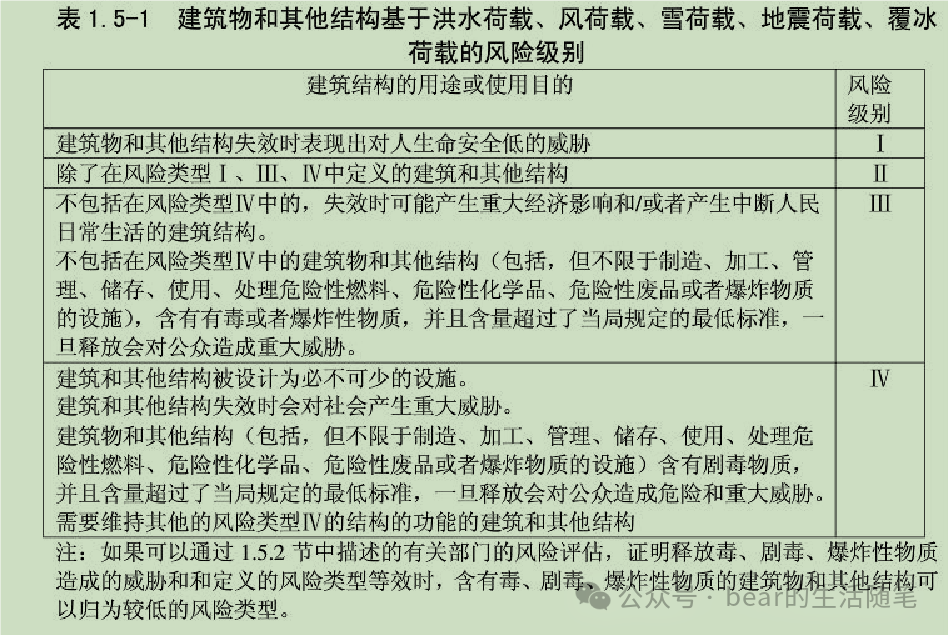 综上所述,不管是通过IBC还是ASCE中所提供的基本信息,对于光伏支架荷载,采用I类是比较合适的。这一部分的内容也在上一篇文章都有详细的分析与介绍,此处不再赘述。
#基本风速这一部分在上一篇文章中对风速的基本理解等等,都已经做了非常相应的一个解释和说明,这里不再进行赘述。
#场地的粗糙度类别
这一部分在上一篇文章中对风速的基本理解等等,都已经做了非常相应的一个解释和说明,这里不再进行赘述。
---Surface Roughness Categories
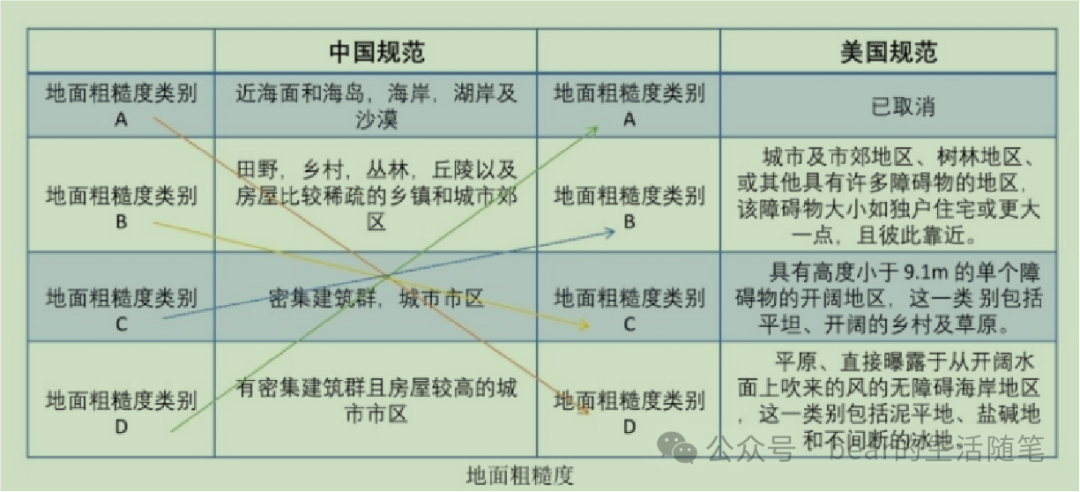
对于所考虑的每一个风向,建筑物的暴露类别应该根据地面粗糙度来确定,地面粗糙度是由自然地形、植被和建筑设施确定的。
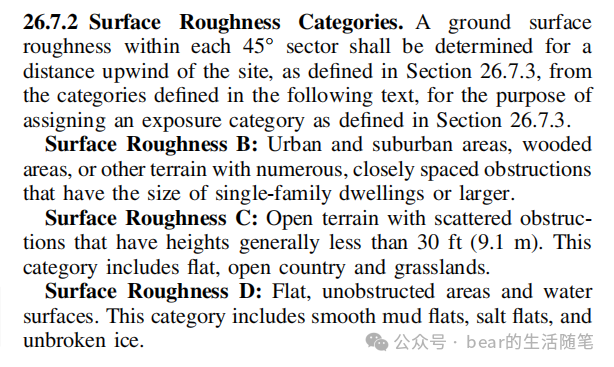
Surface Roughness B: Urban and suburban areas, wooded areas, or other terrain with numerous, closely spaced obstructions that have the size of single-family dwellings larger.(城镇和城市郊区,树林或具有大量密布的不小于单一家庭住宅面积的障碍物的区域。) Surface Roughness C: Open terrain with scattered obstructions that have heights generally less than 30 ft (9.1 m). This category includes flat, open country and grasslands.(具有高度小于 9.10 米的稀疏障碍物的空旷区域,包括平坦的乡村、草场) Surface Roughness D: Flat,unobstructed areas and water surfaces. This category includes smooth mud flats,salt flats,and unbroken ice.(平坦、无遮拦的区域,水面,包括平坦的海滨泥滩、盐滩、未破坏的冰区。)
#风荷载相关参数#高度为z的基本风压-qz
---Velocity pressure calculated,qz
qz: velocity pressure calculated(高度为z的风压计算值)
qzt: velocity pressure calculated(在平均屋顶高度h下,风压计算计算值)
0.613:二分之一空气密度
The constant 0.613 reflects the mass-density of air for the standard atmosphere, that is,temperature of 15 C and sea level pressure of 101.325 kPa and dimensions associated with wind speed in 'm/s The constant is obtained as follows. 常数0.613反映标准大气的质量密度,即温度为15 c,海平面气压为101.325 kpa,尺寸与风速有关,单位为m/s。
Kz:风压暴露系数
Kzt:山地修正系数
Kd:风向系数
Ke:场地标高系数(在ASCE 7-10及以后该系数已经取消)
G:阵风效应系数
V:基本风速
#风压暴露系数-Kz
---Velocity pressure exposure coefficient,Kz
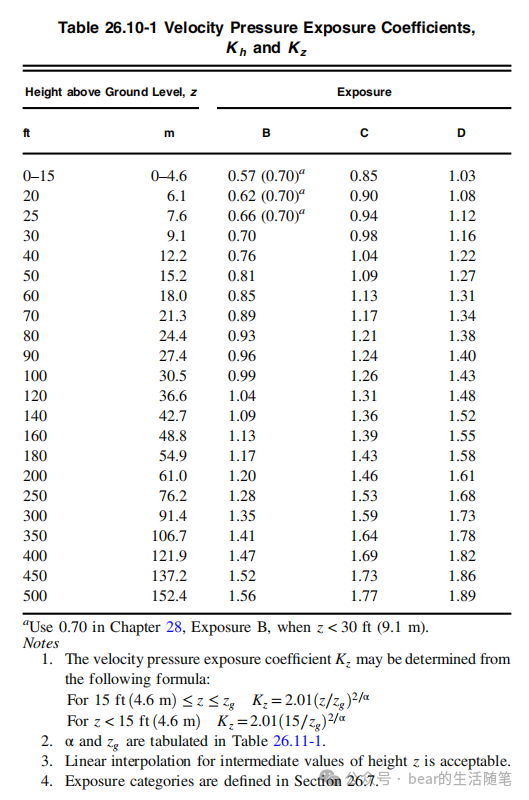
Kz: Wind pressure height variation coefficient(风压高度变化系数,只是翻译的不同罢了)
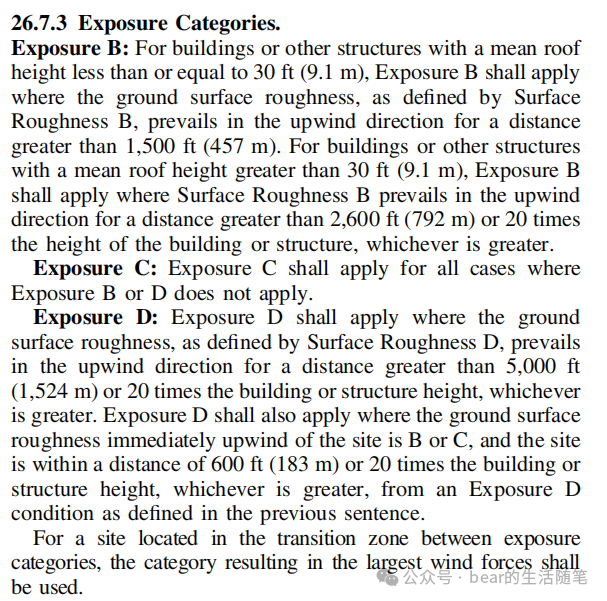
类似中国规范中的风压高度变化系数,提到风压暴露系数就需要提到场地暴露类别,之前也已经提到了场地暴露类别如何进行区分,在场地暴露类别确定好了之后,就可以根据建筑物的高度来进行风压暴露系数的计算。
#净压力系数-
---Net Pressure Coefficient,
有点类似于国标中的风荷载体型系数
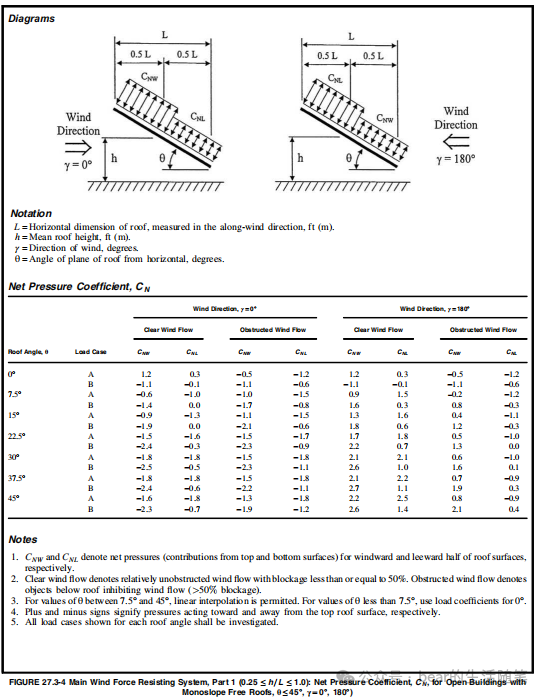
To determine the net pressure coefficients, C_N, we will assume the solar panel as open building with monoslope roof(单坡屋面). We can get these values from Figure 27.3-4 and Figure 27.3-7 of ASCE 7-16 with the assumption of“Clear Wind Flow." Take note that these values are only applicable to solar panels with tilt angle less than or equal to 45°
其中
顺畅风:屋面下挡风面积小于50%; 阻碍风:屋面下挡风面积大于50%; 光伏支架按顺畅风;美标要考虑A B两种独立的工况;
#阵风系数-G
---Gust-effect factor,G
需要通过计算来确定主频率,光伏支架结构一般都是大于1HZ的,结构高度不大,可以近似取定值。
国标美标欧标阵风系数含义是一样的,都是表示风脉动的影响,只是欧标与美标的阵风系数是小于1.0的系数,国标是大于1.0的系数;美标的阵风系数具体数值可根据规范ASCE7-16中的26.11.4计算相应的数值大小。
#风向系数-Kd
---Wind directionality factor,Kd
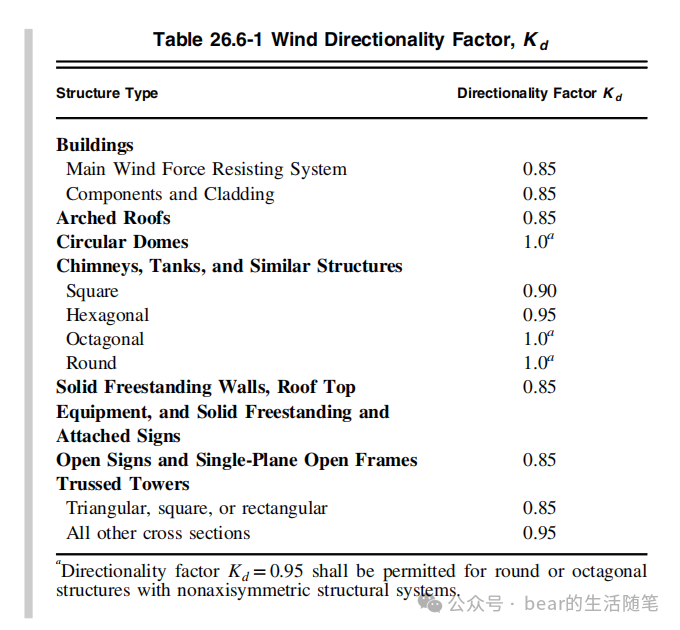
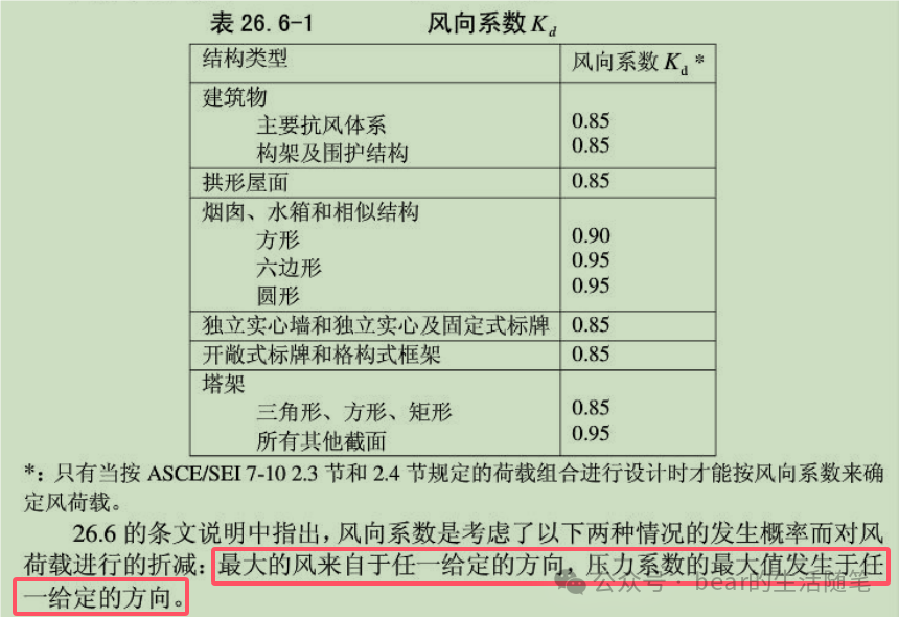
The wind directionality factor,Kd, for the solar panel is equal to 0.85 since the solar panel can be considered as MWFRS(MAIN WIND FORCE RESISTING SYSTEM)(open mono-slope) [也就是开敞的单坡屋面抗侧力体系]when the tilt angle is less than or equal to 45° and as a solid sign for tilt angle greater than 45° based on Table 26.6-1 of ASCE 7-16
通过表26.6-1确定相应的风向系数
#山地修正系数-Kzt
---Topographic factor,Kzt
一般不在山坡和类似区域的地方的,Kzt取1.0,否则按照右表进行相应的计算,主要是考虑是悬崖还是小山丘的场地的影响
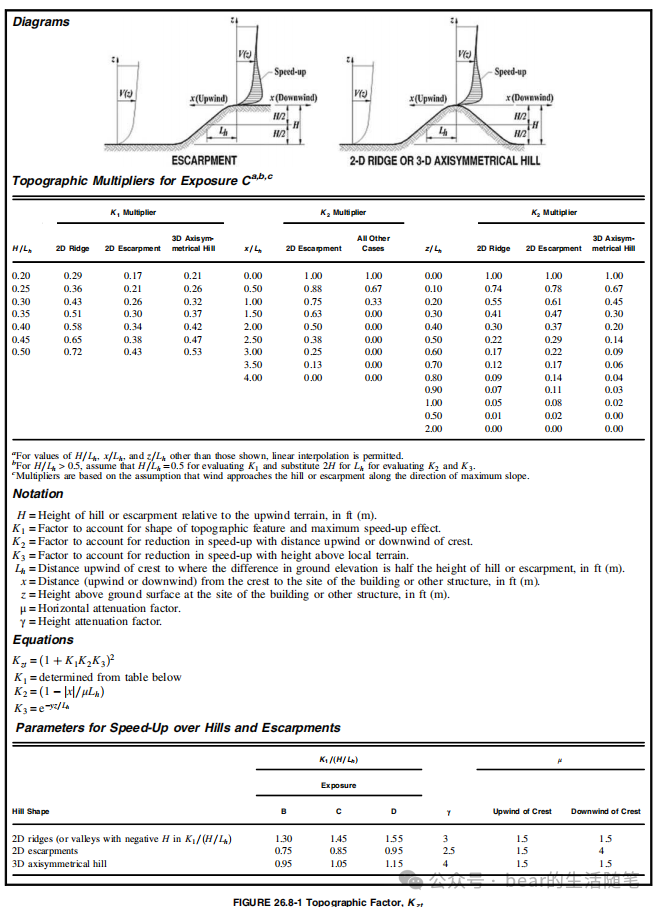
where K1,K2 and K3; are given in Fig. 26.8-1 If site conditions and locations of buildings and other structures do not meet all the conditions specified in Section 26.8.1. then K =1.0.
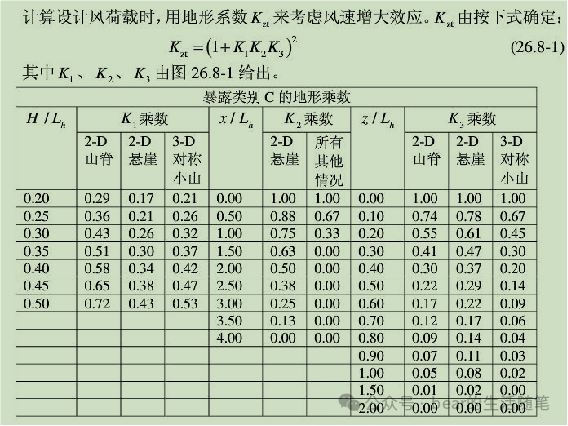
其中K1、K2和K3;如图26.8-1所示,如果现场条件和建筑物和其他结构的位置不符合第26.8.1节规定的所有条件。则K=1.0。在上面的公式中提到了2D与3D,这里也做一个相应的通俗的解释。
K1:考虑地形条件引起的风速增大因子,与山坡倾角α有关; K2:考虑逆风或者顺风向距离脊顶距离的影响因子,与距离坡顶距离有关; K3:为考虑地形上高度的换算因子,与距离地面或者距离脊顶的距离有关; - 2D悬崖和山岭是指具有一定长度(或者认为这个长度比较长),间隔一定距离沿着平行电脑屏幕方向剖2次,剖面只有1个;
- 3D山丘是空间的,间隔一定距离沿着平行电脑屏幕方向剖2次,剖面有2个;
#场地标高系数-Ke
---Ground elevation factor,Ke
该系数只有空气的密度有关系,这一系数只存在于ASCE 7-05中,在ASCE 7-10 7-16以及后续的规范中都已经将该系数取消了。